A historic property report prepared for the South County Line Road project recounts a 1978 Indianapolis News column by Skip Hess, "South(side) is Arising," which noted that homes in subdivisions like Hill Valley Estates were selling for upwards of $100,000. In the report's telling, Hess took that as a sign the south side was now competing with north-side neighborhoods. The same report shows builders were still adding houses to Hill Valley Estates eleven years after the column ran.
That long build-out is the most useful thing a buyer can know about Hill Valley. The name covers about 1,006 lots in 29 sections, platted between 1960 and 1978, with homes built from 1960 to 1989. If you're comparing south-side neighborhoods, a Hill Valley house's section number tells you more than the neighborhood name or its ZIP code median does. Plowing, entrance upkeep and city advocacy on its streets also depend on a voluntary association that about a third of households pay for.
Four developers, 29 sections, one name
According to the report, Hill Valley Estates is bounded by Railroad Road and Peterman Road on the west, Meridian School Road on the north, South East Street on the east, and County Line Road, Beechview Lane and Davis Lane on the south. Building started in the northeast corner in the early 1960s, moved west, and reached County Line Road in the late 1970s. The report's section table, built from Marion County Recorder plats and county GIS build dates, breaks down like this.
| Sections | Platted | Developer of record | Homes built | Housing described in the report |
|---|---|---|---|---|
| 1–15 | 1960–1971 | Mostly Hill Valley Development Corp.; Section 7 by Hill Valley Sales Corp. and, for Part C, Kevin and Shirley Henselmeier; a few plats not available online | 1960 to 1986 | Ranch, bi-level, contemporary and Neo-Tudor homes by multiple individual builders |
| 16–27 | 1967–1972 | Yeager Contracting Co., with several plats not available online | 1964 to 1989 | Later ranch and bi-level stock with less style variety |
| 28 | 1977 | Carson City, Inc. | 1978 to 1989 | Contemporary ranch, Builder Modern and bi-level homes |
| 29 | 1978 | Wetzel Engineers | 1978 to 1981 | Northwest corner, platted last |
The first company, Hill Valley Development Corporation, was led by Harold Miller, Harold Kirch and George F. Kopetsky. It planned the first fifteen sections and advertised them as "over 200 rolling acres, with wooded sections," with city water, winding streets, antique gas street lights and permanent concrete streets. Yeager Contracting Company, run by Robert K. and Virginia Yeager, planned sections 16 through 27 from about 1967 to 1972. Robert Yeager is also credited with parts of the Carefree Subdivision, Winchester Village and Southridge Village.
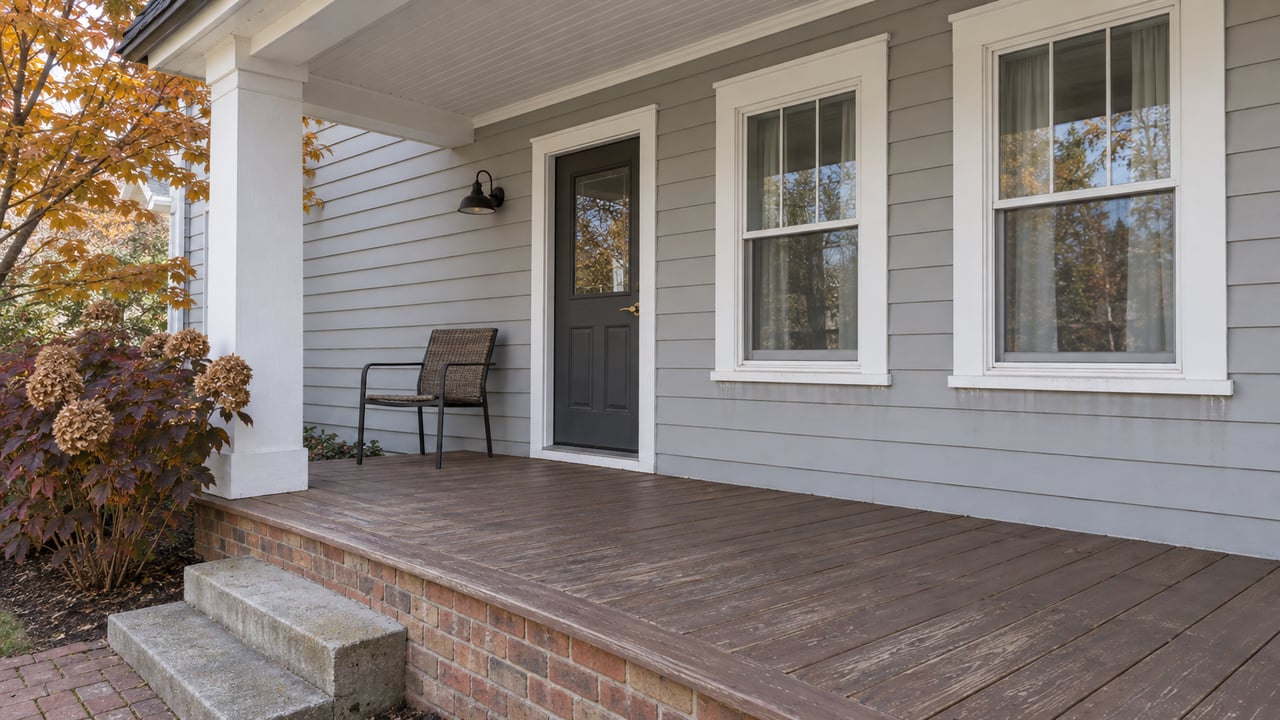
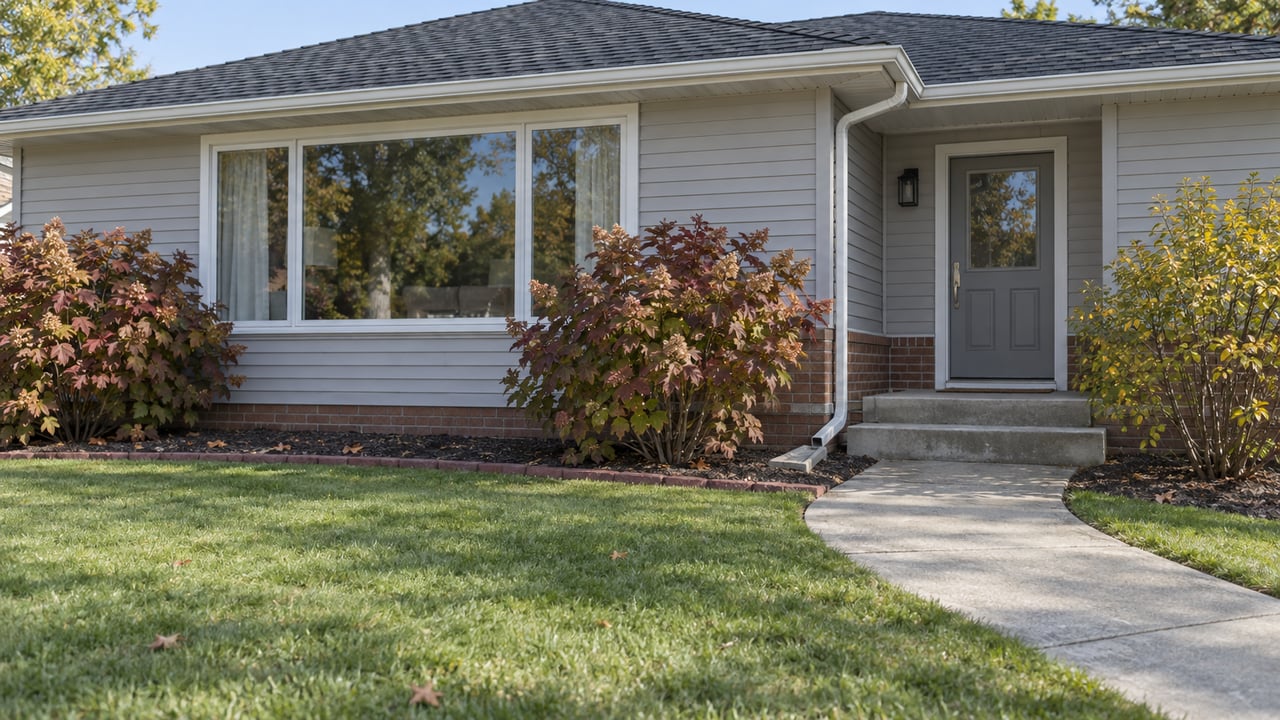
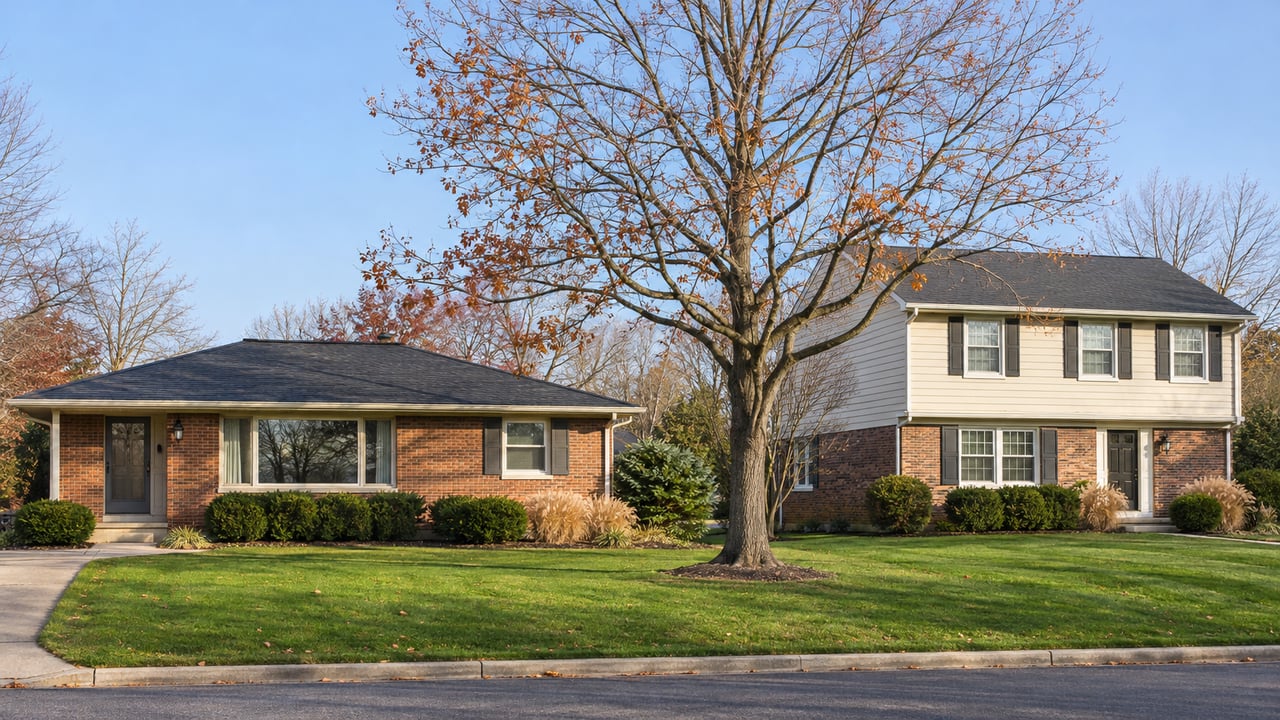
The report says the gap between the early 1960s homes and the late 1980s homes is wider than the "slight variations" normally expected when one builder files successive plats. It credits the difference to the decades the homes were built in and to the number of development companies involved. On one Hill Valley street you can be looking at a house with an early-1960s floor plan and finishes, and on another, a bi-level that went up during the Reagan years. Build year and house style track the section, so a "midcentury Hill Valley home" can mean very different houses. Our Hill Valley staging guide covers how to present the older floor plans.
Where the oldest and newest homes sit
Geography is a decent shortcut. The earliest homes are in the northeast, toward Meridian School Road and South East Street. The newest are along the southern edge: Section 28, next to County Line Road, was platted in five parts in 1977, and its homes were built from 1978 to 1989. Meridian Street runs through the middle, and the homeowners association calls the two sides West Hill Valley and East Hill Valley.
The boundary also takes in Perry Meridian High School, St. Barnabas Catholic School and Friedens United Church of Christ. The streets are mostly curvilinear, with loop roads, culs-de-sac and concrete curbs, and the report names older-growth trees as the subdivision's most distinct natural feature.
Part of the neighborhood has also drawn preservation interest. In a 2021 letter, the Indiana State Historic Preservation Office called a portion it referred to as "Royal Meadows" a "good example of a Custom Development composed of a wide variety of types and styles," bounded roughly by W. Ralston Drive, Meadow Vista Drive, W. County Line Road and Maple View Drive. The report's authors countered that the subdivision as a whole was too young to qualify, and that a smaller district of Sections 1 through 15 would need further study. Both sides of that discussion agree that the variety of the houses is what defines the place.
Why the ZIP code median misses most of this
Hill Valley sits across two ZIP codes, and their October numbers differ. The Indiana Association of REALTORS Housing Hub puts the October 2026 median sale price at $240,750 in ZIP 46217 and $220,000 in ZIP 46227. October sales in both were thin. ZIP 46217 had 28 closings in October 2026, down 35% from a year earlier, and 46227 had 41, down 27%.
With that few sales, a monthly median can move just because of which houses happened to close. If three Section 28 bi-levels and one updated 1962 ranch close in the same month, the Hill Valley "average" describes none of them. A fair comparison for a Hill Valley house comes from homes of the same era and type, ideally in the same section, and the ZIP median is background.
That background points to a slower fall. In 46217, months of inventory reached 3.1 in October 2026, up 15% from a year earlier. Across Marion County in October 2026, the median sale price was $240,000, down 3% year over year. Closed sales fell 15% to 878, the median time from listing to pending rose 35% to 35 days, and months of inventory climbed 23% to 3.7. County homes sold for an average of 94.3% of list price that month. For a buyer, that means more time to compare sections this season. It also means two Hill Valley houses listed at the same price can land quite far apart once condition and build era are priced in.
The $45 association behind the side streets
Services on the streets themselves come from the Hill Valley Homeowners Association. Residents formed it in 1969 to oppose a proposed mobile home park next to the neighborhood, and that proposal was defeated. Since then it has maintained the subdivision entrances on Meridian Street. In 1992 it took part in Public Service Commission proceedings over a Southside Utilities sewer rate increase, and Hill Valley Estates residents ended up with savings on their sewer bills. Its annual picnic is held at German Park.
Membership is voluntary, and dues for 2026 are $45 a year. The association's January 2026 newsletter lists snow removal first among membership benefits, noting that "the city does not plow any of our side streets or courts." Dues also go toward safety coordination with police, advocacy on zoning, traffic, and street and sewer repair, the quarterly newsletter, the June garage sale, entrance island maintenance and the holiday decoration contest.
Every household on those streets gets the plowing, but only members pay for it. In its October 2025 newsletter, the board said membership had recovered to 38% after several years of decline. The October 2026 issue asked residents for ideas to grow membership and listed two open board seats. It also reported 274 people at this year's picnic, up from 242 the year before. If you're comparing Hill Valley with a newer Greenwood subdivision, the Hill Valley question worth asking on a showing is how involved the neighbors on that street are, because volunteers and member dues pay for the plowing and the entrance upkeep. We share the $45 figure as general information, not legal, tax or financial advice, so confirm the details for any specific property with the right professional.
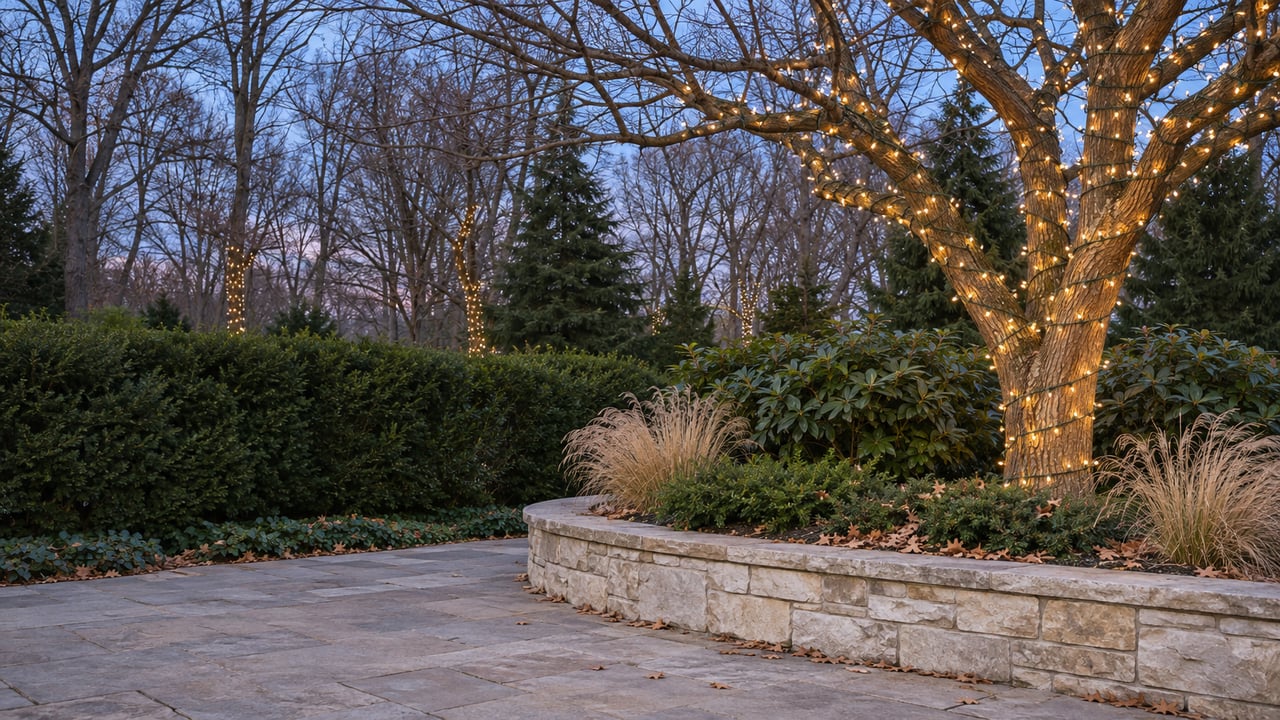
If you close in time for the holidays, the decoration contest is coming up. Judges will drive the neighborhood with lights on after dark from Sunday, December 13 through Friday, December 18, and winners with a paid membership receive restaurant gift cards. The city's leaf collection season was projected to run from November 9 through December 4.
What's planned for County Line Road
The newest homes in Section 28 sit next to the one major road project planned along Hill Valley's edge. The City of Indianapolis is redesigning South County Line Road to reflect updated traffic projections and safety needs. Current plans show a 10-foot trail on the north side and a 6-foot sidewalk on the south side, and construction is expected to begin in 2028. Exhibits from the September 16, 2026 public meeting show the work in phases: 2028 for the first phase, 2028 to 2029 for the second and 2029 for the third. A buyer looking at a late-1970s or 1980s house near County Line can expect a few years of planning before crews arrive, then a road with a trail along the Hill Valley side.
For a wider look at the area, our South Perry and Hill Valley comparison and the Hill Valley neighborhood page are good next reads.
If you own a home in Hill Valley and want to know where it stands, ask the Jeff Paxson Team to pull comparable sales from homes of your own era and style, not just the ZIP code average. And if you decide to sell, our 4.5% listing fee comes with full marketing. Start with a Free Home Valuation for your section of Hill Valley.